Launch offer — valid today only

📄 Digital book in PDF · read it on your phone or print it

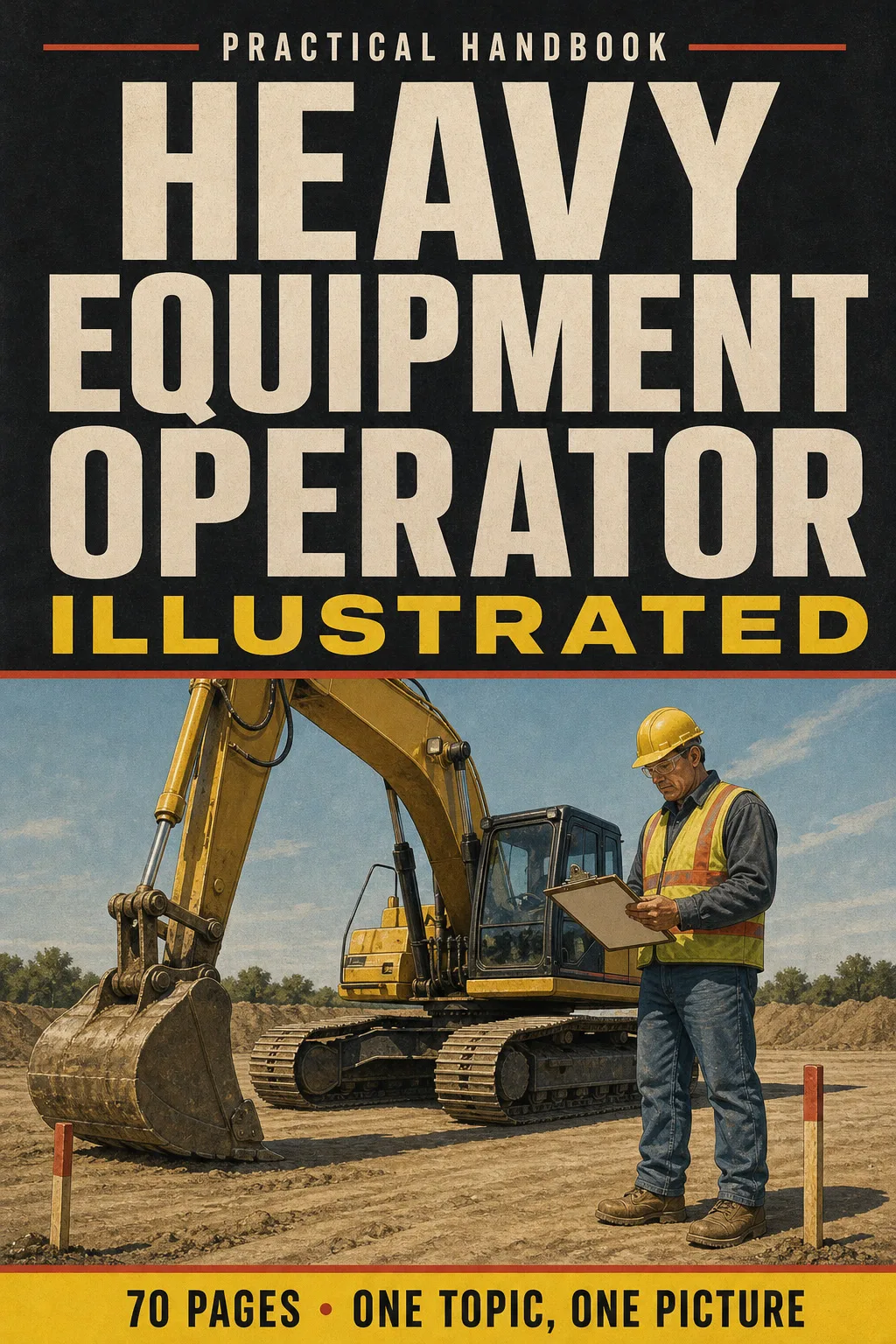
Heavy Equipment Operation in Drawings: From the Walk-Around to the Grade Stake, the Same Order Every Shift One Topic on Every Page

The cab lever by lever, the walk-around, the 811 paint colors, trenching, sloping by soil type, dozer and grader passes, grade stakes, hand signals and shutdown. Every topic gets its own page: the drawing first, then what you need to remember. 70 illustrated pages.

LEARN IT PAGE BY PAGE

🔒 Secure checkout · PDF by email · 30-day guarantee

Every topic, its own pageEvery check and every machine move drawn, with the explanation right beside it
70 illustrated pages9 parts, from the five machines to the words the foreman uses
Up-to-date sourcesOSHA 29 CFR Part 1926, the 811 system and the APWA color code
PDF by emailFormat

Look Inside the Book

Every page has one big drawing and a box with the numbers, rules and steps you need to know:

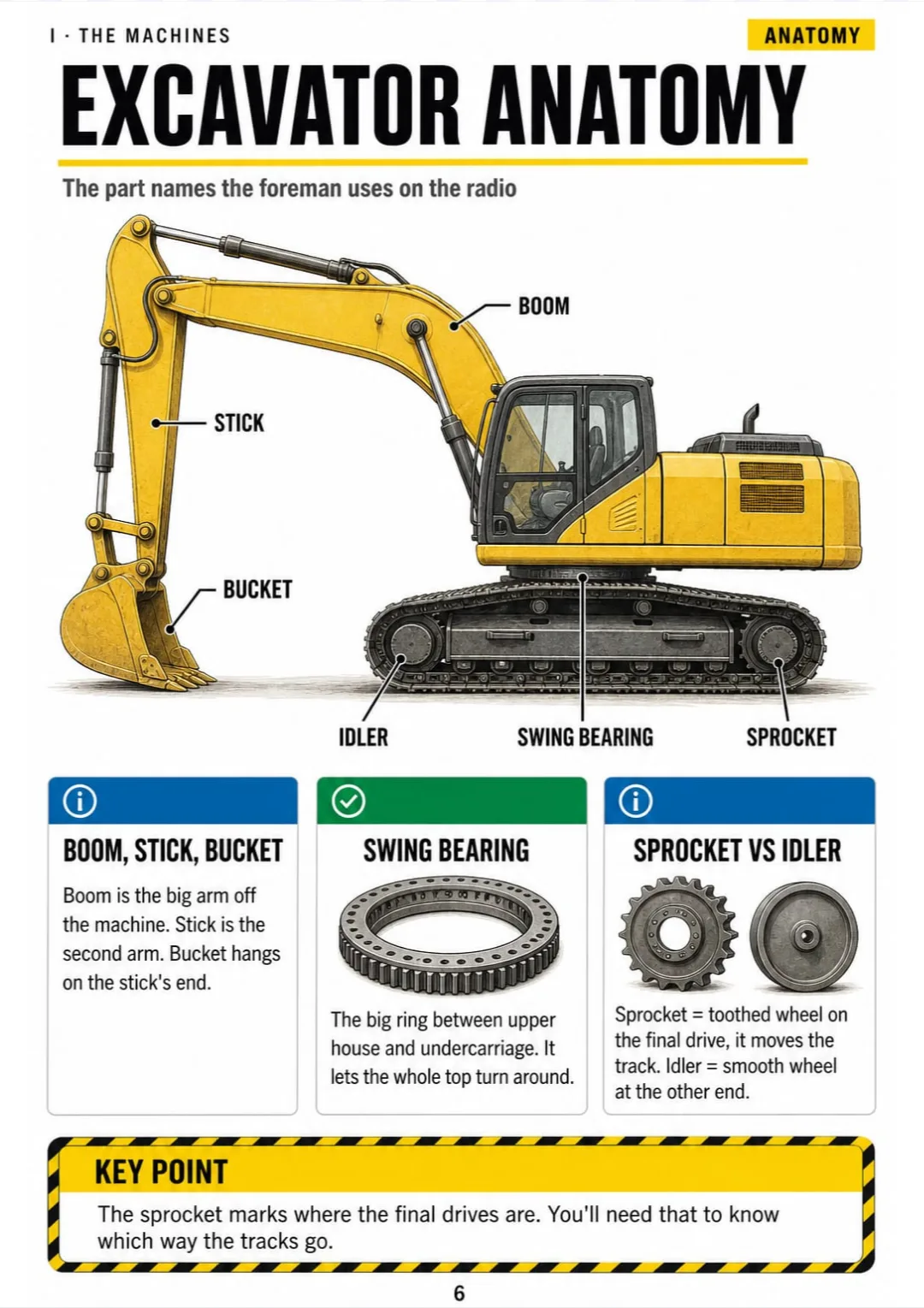
Boom, stick, bucket, cylinders, swing bearing, undercarriage, idler, sprocket and counterweight, labeled.
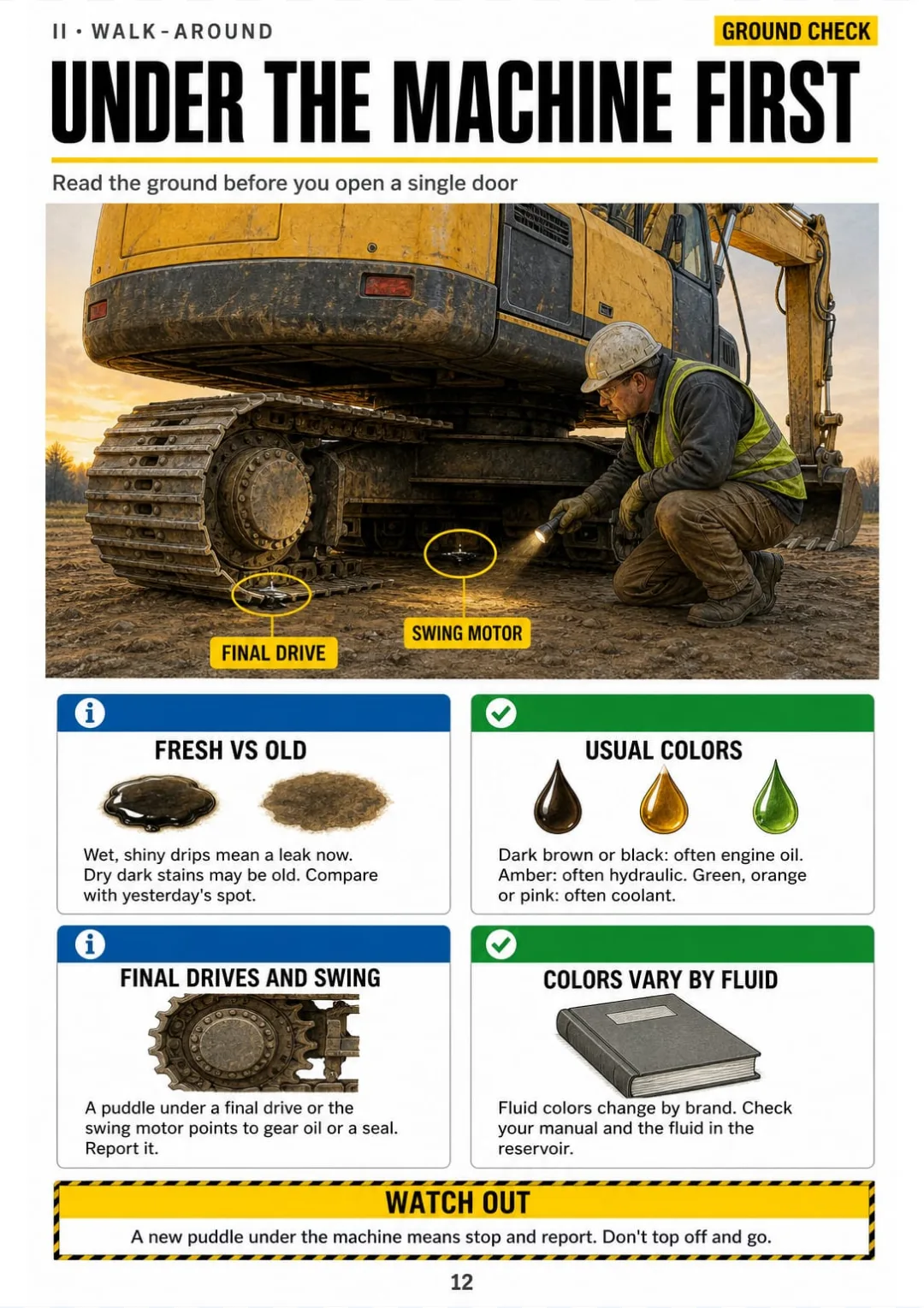
Fresh drips, usual fluid colors and puddles under final drives or swing motor.
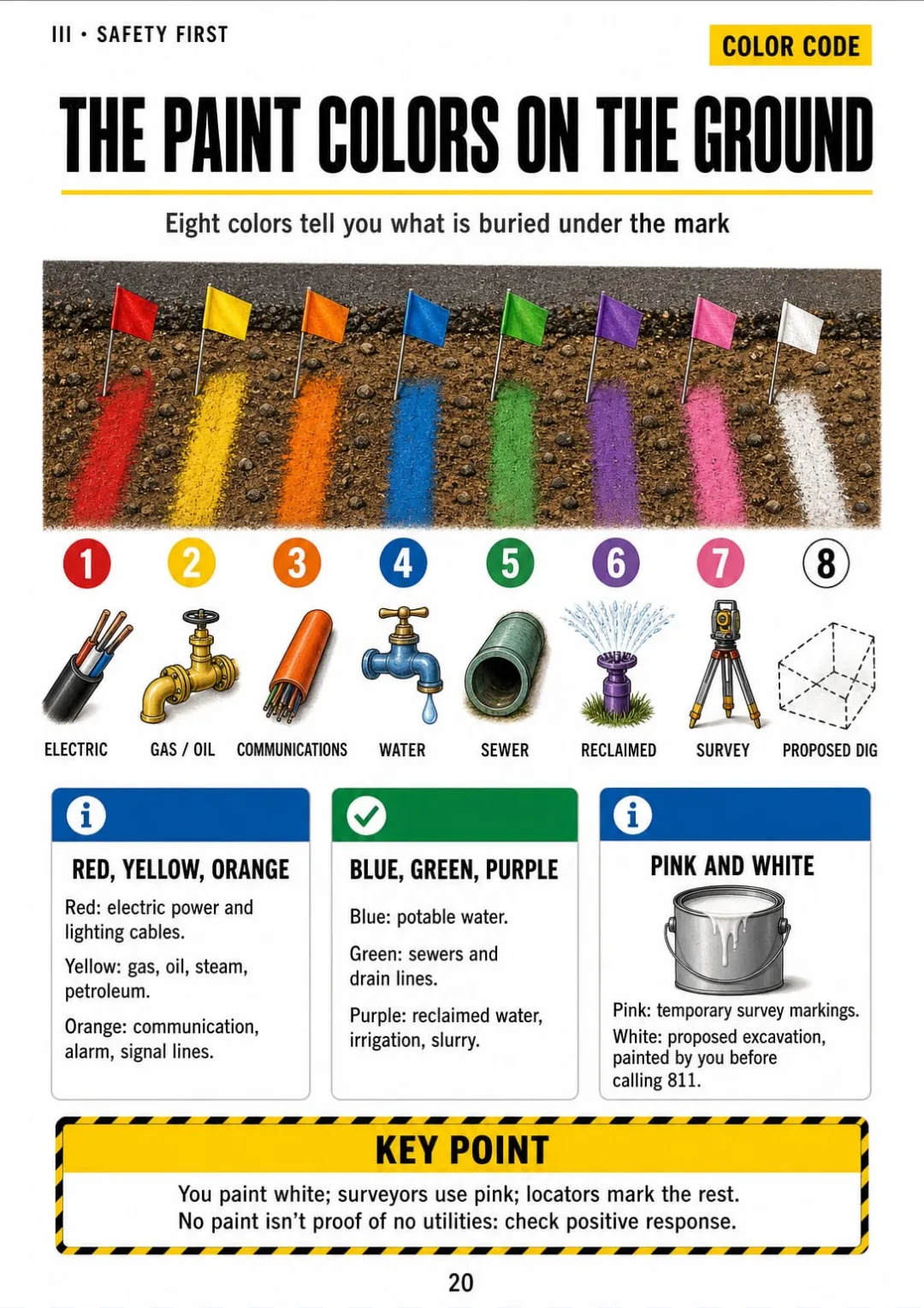
APWA color code: red electric, yellow gas, orange comms, blue water, green sewer, purple reclaimed, pink survey, white dig.
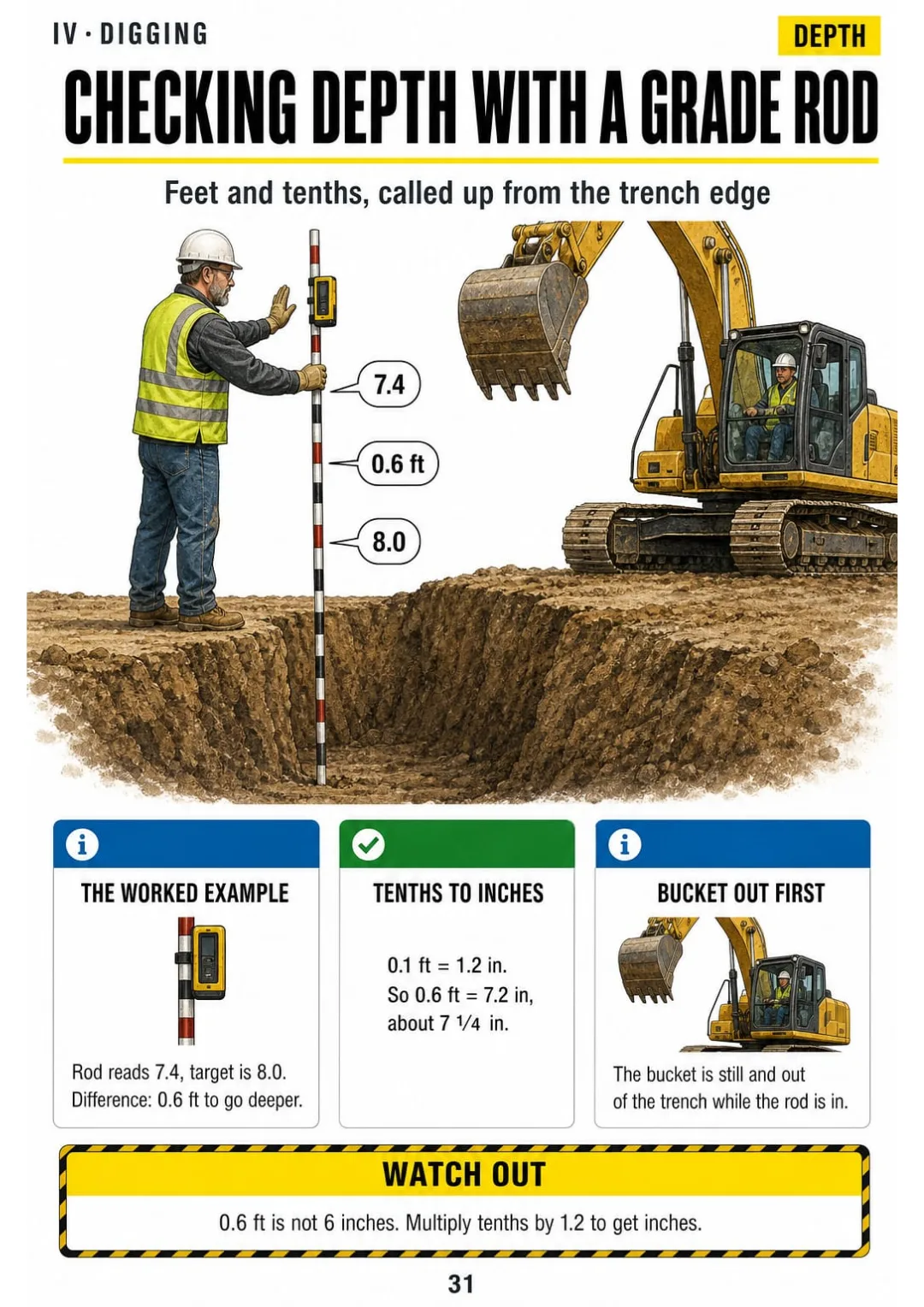
Rod reads 7.4, target 8.0: 0.6 ft deeper = 7.2 in.
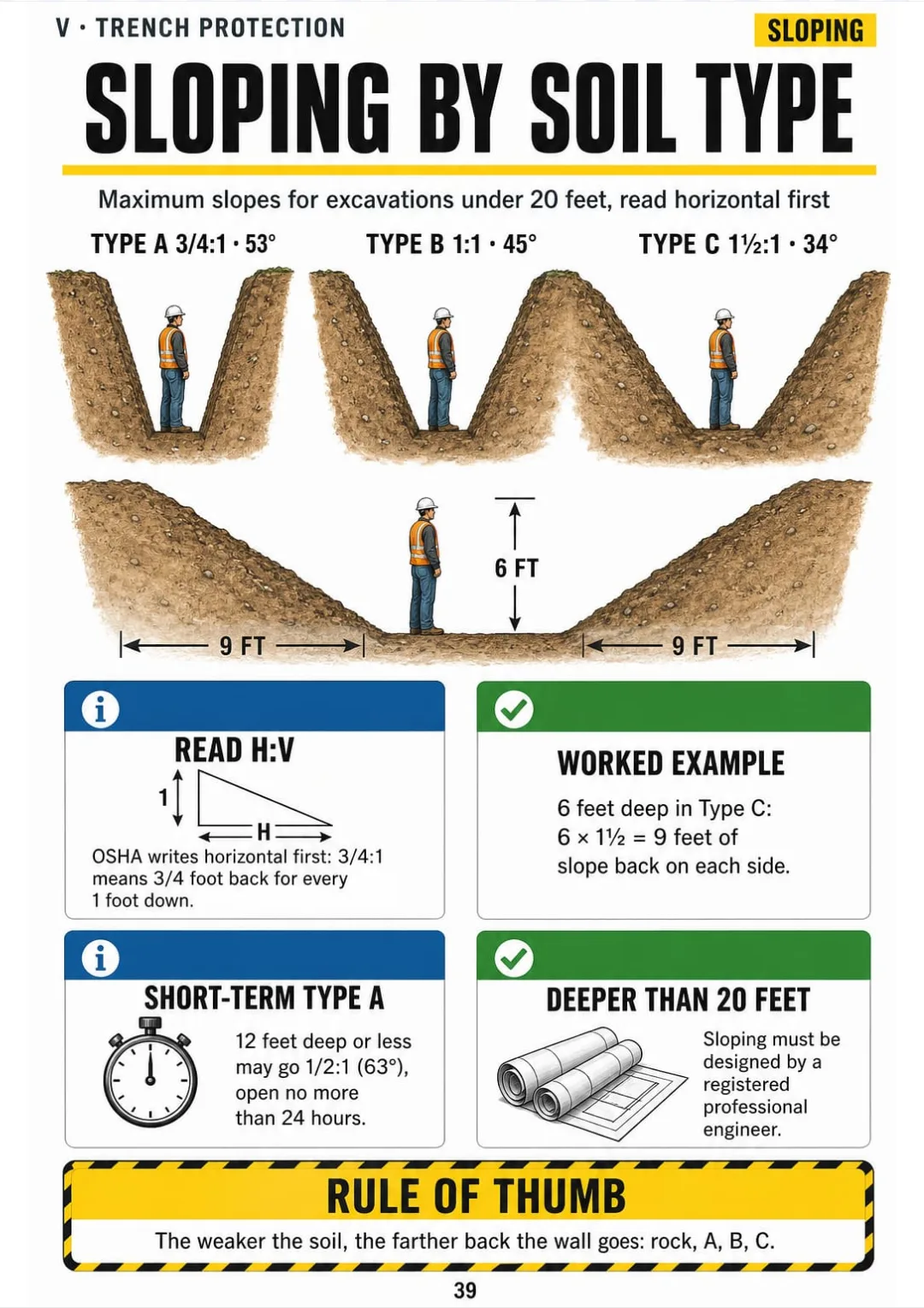
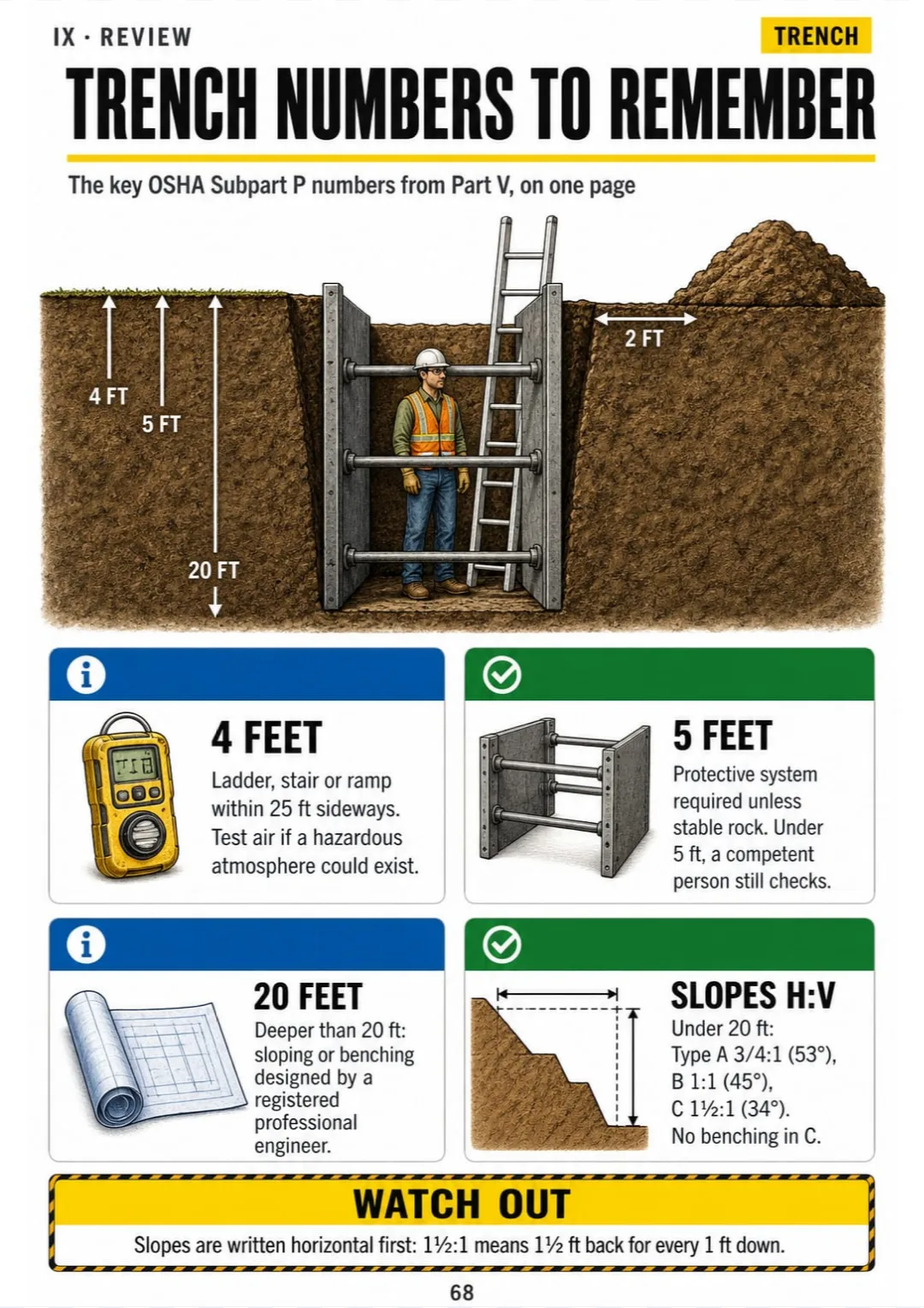
Type A 3/4:1 (53°) · Type B 1:1 (45°) · Type C 1½:1 (34°)
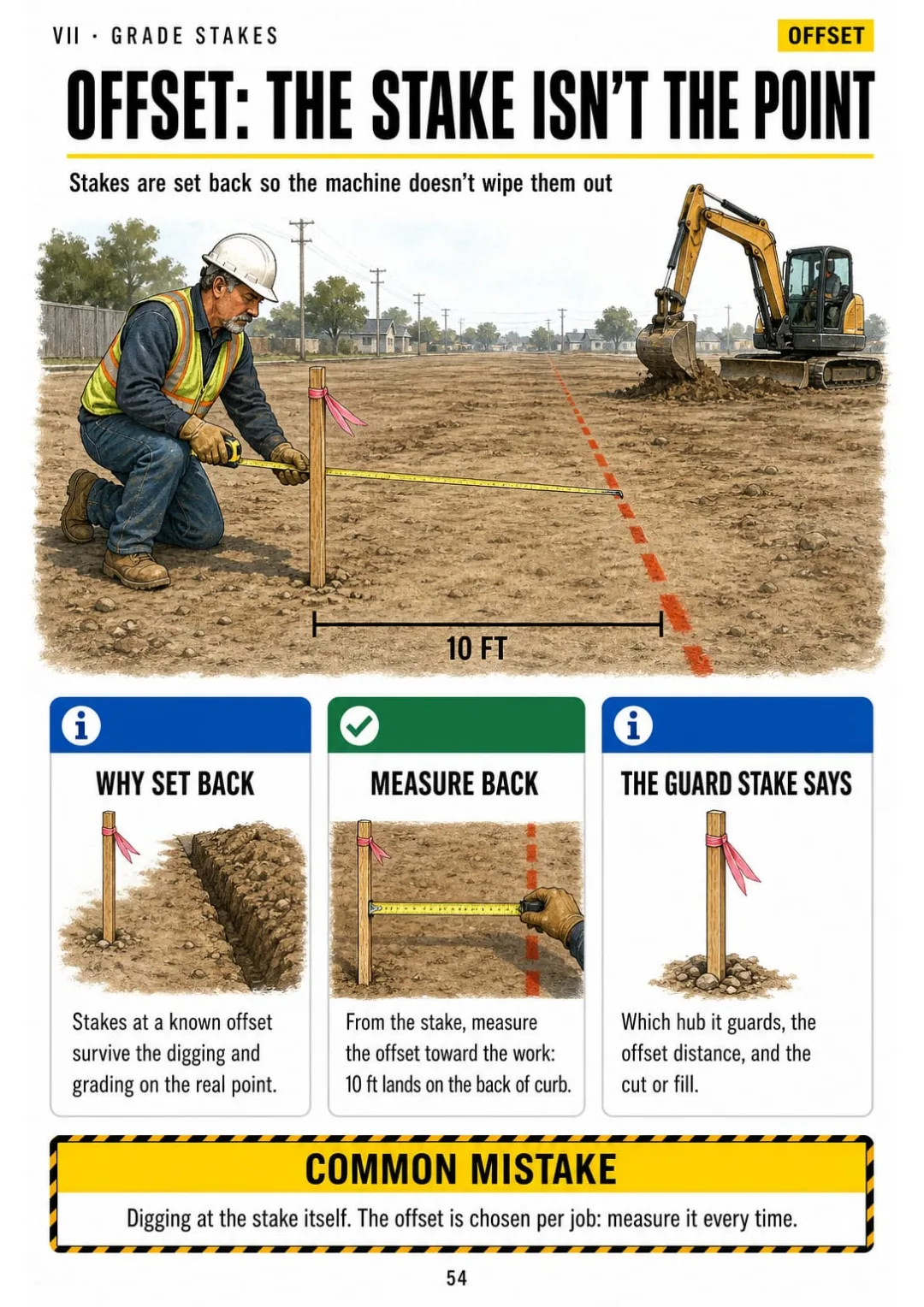
10' O/S: measure 10 ft from the stake to reach the back of curb.
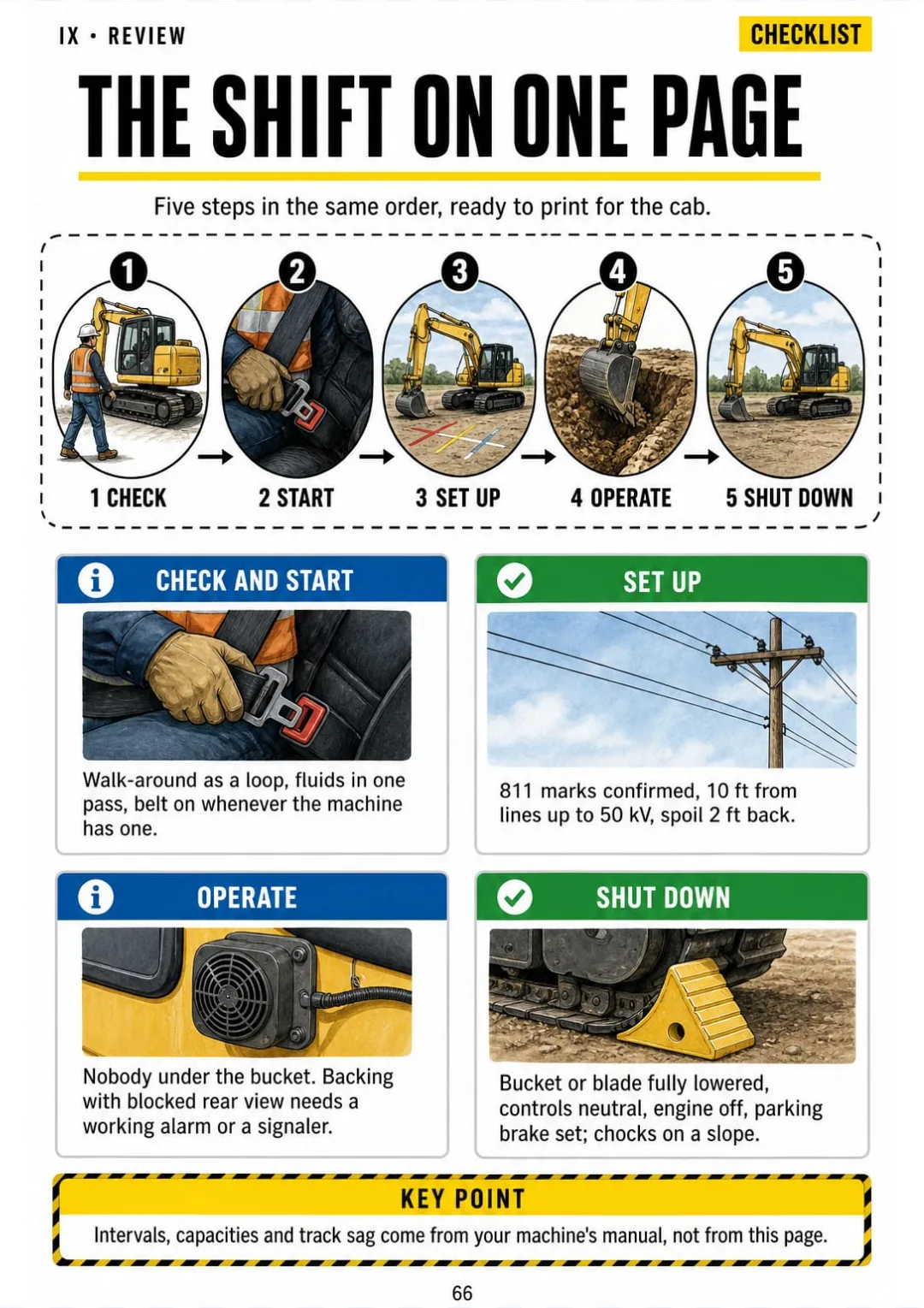
Check, start, set up, operate, shut down: one line per step for the cab.
4 ft, 5 ft, 20 ft, 2 ft and slopes 3/4:1, 1:1, 1½:1.

Swipe to see more →

These are real pages from the book. The table of contents is the full one: 9 parts and 66 topics.

The Problem Isn't You. It's How It Was Explained to You.

You're at the edge of the cut with the bucket ready. The ground in front of you is covered in painted lines and little flags: yellow here, orange there, a green line running under the curb. The foreman says "watch the gas" and walks off.

You've seen the color code before. It was a list in a manual, eight colors next to eight words. A list is hard to pull up when the paint is on dirt and the engine is running. Nobody ever showed it to you the way it looks on the ground.

APWA color code: red electric, yellow gas, orange comms, blue water, green sewer, purple reclaimed, pink survey, white dig.

In the book, that same ground is drawn. Each line is painted in its own color, with what runs under it: red electric, yellow gas, orange communications, blue water, green sewer, purple reclaimed, pink survey, white for the proposed dig. One look and you know what's under the bucket.

The rest of the book works the same way. The walk-around is drawn as one loop, the swing radius is shown from above, sloping goes by soil type and the grade stake is read in a worked example. Each one has its own page.

So the next time there's paint on the ground, you know what each color means and where to slow down, and you don't have to go back to the manual. You read the site like an operator.

COMPARE FOR YOURSELF

The Same Topic, Two Ways to Learn It

THIS
  • The manual: line after line
  • Daily checks explained only in words
  • You climb in the cab still unsure
Prior to the commencement of operations each shift, the operator shall conduct a visual inspection of the machine in its entirety, proceeding in a systematic manner around the unit. Attention should be directed to undercarriage components, including track tension, rollers, idlers and sprockets, as well as to the work equipment, linkage pins, bushings and ground engaging tools. Fluid levels, including engine oil, hydraulic oil and coolant, should be verified in accordance with manufacturer specifications, and any evidence of leakage, damage or excessive wear shall be reported prior to operation.
FOR THIS
  • The walk-around in one drawing
  • The 5 stops in a box
  • You see it and you get it
Fresh drips, usual fluid colors and puddles under final drives or swing motor.
CONTENTS

Take a Look at the 9 Parts and 66 Topics

The machines and the cab, the walk-around and startup, safety before the first bite, digging and trenching, trench protection, dozer, loader and grader, grade stakes and slope, hand signals and shutdown, and the review: 70 pages, all illustrated.

IThe Machines and the Cab · pp. 5-10
  1. Five Machines, Five Jobs
  2. Excavator Anatomy
  3. Dozer, Loader and Grader Anatomy
  4. The Excavator Cab, Lever by Lever
  5. Pedals, Switches and the Safety Lever
  6. Travel Direction: Where Is the Front?
IIThe Walk-Around and Startup · pp. 11-18
  1. The Walk-Around as a Loop
  2. Under the Machine First
  3. Tracks, Rollers and Track Sag
  4. Bucket, Pins and Teeth
  5. Fluid Levels in One Pass
  6. Hoses and the Pinhole Leak Rule
  7. Greasing: Which Points, How Often
  8. Getting On, Belting In, Starting Up
IIISafety Before the First Bite · pp. 19-26
  1. 811 and the Tolerance Zone
  2. The Paint Colors on the Ground
  3. Overhead Power Lines: the 10-Foot Minimum
  4. Swing Radius and the Blind Zone
  5. Backup Alarm, Spotter and Eye Contact
  6. Slopes, Edges and Rollover
  7. Loading Onto a Trailer
  8. Fueling and Hot Work Near the Machine
IVExcavator: Digging and Trenching · pp. 27-35
  1. Setting Up: Tracks and Final Drives
  2. The Digging Cycle in 4 Moves
  3. Bucket Angle and Teeth Attack
  4. Digging a Clean, Straight Trench
  5. Checking Depth With a Grade Rod
  6. Where the Spoil Goes: the 2-Foot Rule
  7. Loading a Dump Truck
  8. Digging Around Utilities
  9. Backfill and Compaction Lifts
VTrench Protection · pp. 36-42
  1. Trench or Excavation: the Numbers
  2. The Competent Person
  3. Soil Types A, B and C
  4. Sloping by Soil Type
  5. Benching
  6. Trench Boxes and Shoring
  7. Ladders, Water and Air
VIDozer, Loader and Grader · pp. 43-51
  1. Dozer Controls and Blade Moves
  2. Pushing Dirt: Slot Dozing
  3. Spreading Fill and Finishing Grade
  4. Wheel Loader: Filling the Bucket
  5. Wheel Loader: the V-Pattern
  6. Motor Grader: Blade Angle and Pitch
  7. Motor Grader: Wheel Lean and Articulation
  8. Grader Passes and the Windrow
  9. Compaction Equipment Basics
VIIGrade Stakes, Cut/Fill and Slope · pp. 52-60
  1. Reading a Grade Stake
  2. Stations: 1+00 Is 100 Feet
  3. Offset: Why the Stake Isn't Where You Dig
  4. Cut and Fill, Hub and Lath
  5. Feet and Tenths to Inches
  6. Percent Grade in One Formula
  7. Slope Ratios: 2:1 and 3:1
  8. Slope Stakes and Catch Points
  9. Laser and Machine Grade Basics
VIIIHand Signals and Shutdown · pp. 61-65
  1. Hand Signals: Stop and Emergency Stop
  2. Hand Signals: Boom, Stick and Bucket
  3. Hand Signals: Swing, Travel and Move This Far
  4. Shutdown in the Same Order
  5. End-of-Shift Notes and Lockout
IXReview and Checklists · pp. 66-70
  1. The Shift on One Page
  2. Most Common Mistakes on the Machine
  3. Trench Numbers to Remember
  4. Grade Stake Worked Review
  5. Words the Foreman Uses

One Page, One Topic, All Clear

Think of it this way:

It's seven in the morning. The foreman points at a stake that says 2+50, 10' O/S, C 1.8 and tells you to bring the grade down. You need to know what that stake is telling you, right now.

You open the book to the grade stake page and it's all drawn: the stake, the 10-foot offset to your line and the 1.8-foot cut below the hub. You read it left to right, the same way every time.

Type A 3/4:1 (53°) · Type B 1:1 (45°) · Type C 1½:1 (34°)

The walk-around, the 811 paint colors, sloping by soil type, the grader's blade angle and the hand signals work the same way. Each one is on its own page.

Heavy Equipment Operator Illustrated has 9 parts and 66 topics, all drawn. At the end there's a review with the shift on one page, the trench numbers, a worked grade stake review and the words the foreman uses.

What you see drawn, you don't have to memorize.

What's Inside Heavy Equipment Operator Illustrated:

Ipp. 5-10

The Machines and the Cab

The machines on a civil site and what each one does, the excavator, dozer, loader and grader labeled part by part, the cab and its controls, the pedals and the safety lever, and how to tell which way is front.

IIpp. 11-18

The Walk-Around and Startup

The walk-around as one loop, under the machine first, tracks and track sag, bucket, pins and teeth, fluids in one pass, the pinhole leak rule, greasing, and getting on, belting in and starting up.

IIIpp. 19-26

Safety Before the First Bite

811 and the tolerance zone, the paint colors on the ground, the 10-foot minimum from power lines, swing radius and blind zone, spotter and eye contact, slopes and rollover, trailer loading and fueling.

IVpp. 27-35

Excavator: Digging and Trenching

Setting up on tracks, the digging cycle in 4 moves, bucket angle, a clean straight trench, checking depth with a grade rod, the 2-foot spoil rule, loading a truck, digging around utilities and backfill lifts.

Vpp. 36-42

Trench Protection

When a trench counts as a trench, the competent person, soil types A, B and C, sloping by soil type, benching, trench boxes and shoring, and ladders, water and air.

VIpp. 43-51

Dozer, Loader and Grader

Dozer blade moves and slot dozing, spreading fill and finishing grade, filling a loader bucket and the V-pattern, grader blade angle, pitch, wheel lean and articulation, passes and the windrow, and compaction.

VIIpp. 52-60

Grade Stakes, Cut/Fill and Slope

Reading a grade stake, stations, offset, cut and fill, hub and lath, feet and tenths to inches, percent grade in one formula, 2:1 and 3:1 slopes, slope stakes and catch points, and laser grade basics.

VIIIpp. 61-65

Hand Signals and Shutdown

Stop and emergency stop, boom, stick and bucket signals, swing, travel and move-this-far, shutdown in the same order, and end-of-shift notes and lockout.

IXpp. 66-70

Review and Checklists

The shift on one page, the most common mistakes on the machine, the trench numbers to remember, a worked grade stake review and the words the foreman uses.

At the end of the book: A review part with the shift on one page, the most common mistakes, the trench numbers and a worked grade stake review.
Plus: 2 Free Books

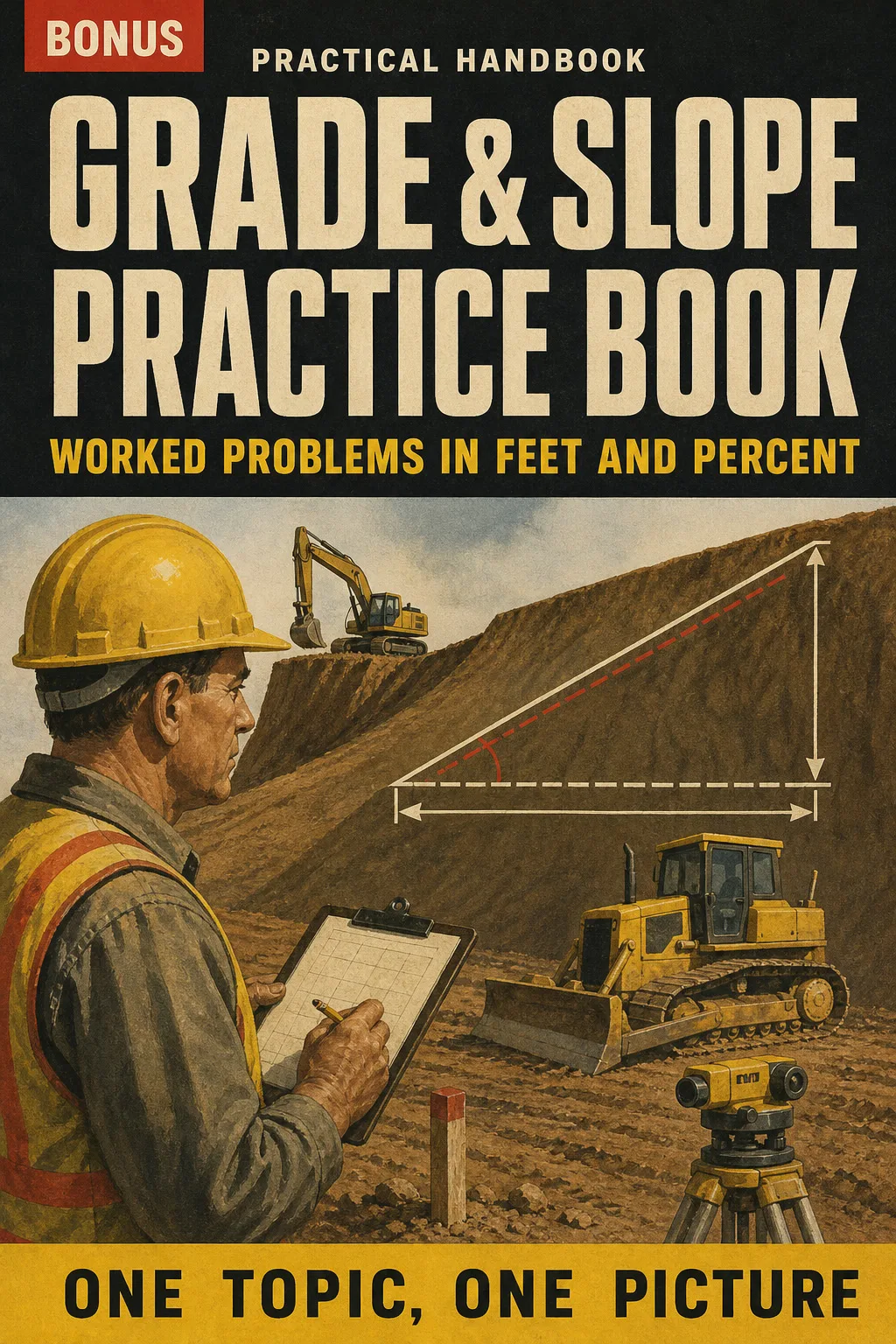
Grade & Slope Practice Book: Worked Problems in Feet and Percent

BONUS 1: «Grade & Slope Practice Book: Worked Problems in Feet and Percent»

Value on its own: US$ 17.90

Practice reading stakes, cut and fill, percent grade and trench width on worked problems until the numbers make sense before you're on the machine.

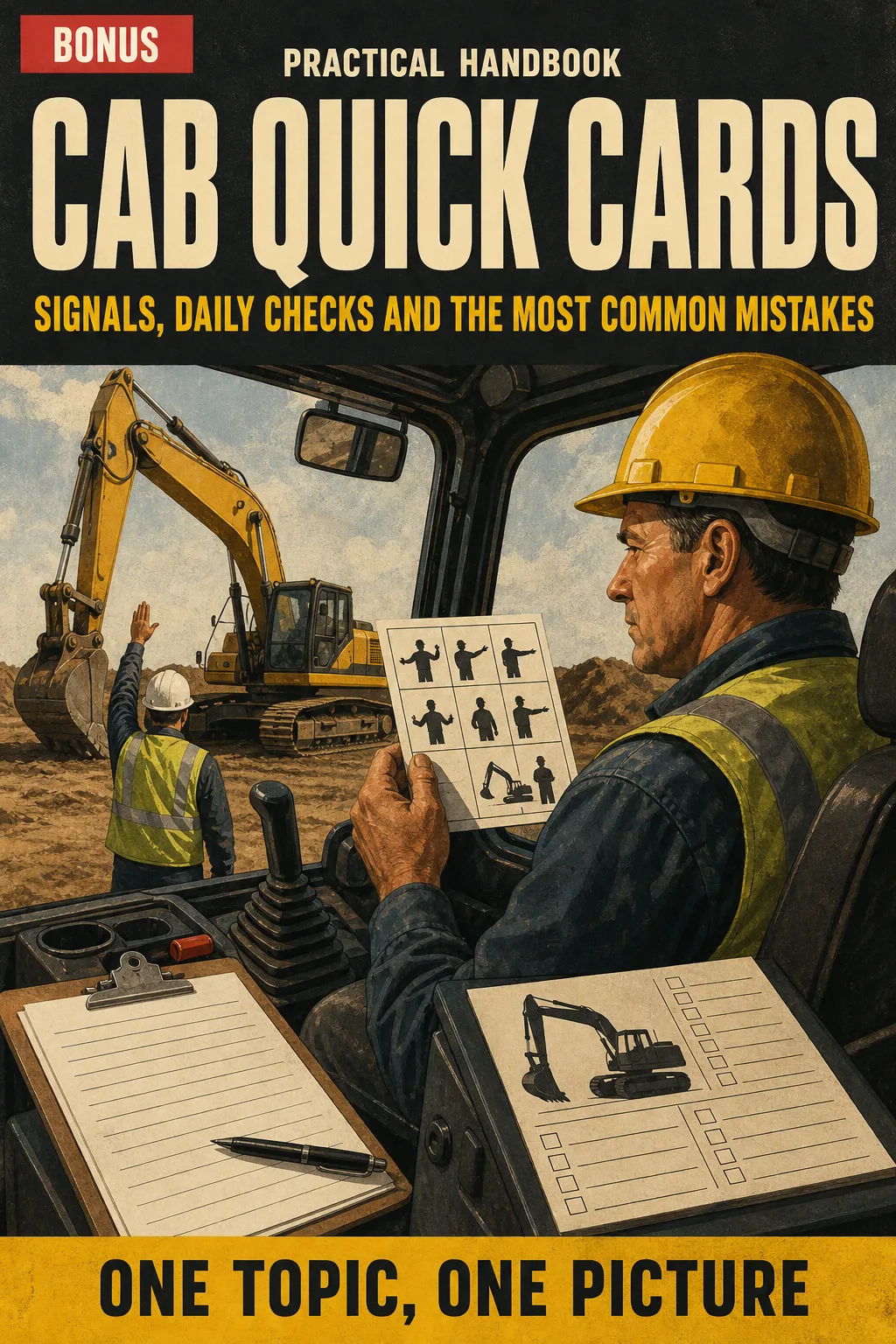
Cab Quick Cards: Signals, Daily Checks and the Most Common Mistakes

BONUS 2: «Cab Quick Cards: Signals, Daily Checks and the Most Common Mistakes»

Value on its own: US$ 14.90

Printable cards to keep in the cab with the hand signals, the walk-around order and the mistakes operators make most often, there at a glance when you need them.

Heavy Equipment Operator Illustrated with 2 Free Books

  • Heavy Equipment Operator Illustrated: 70 illustrated pagesUS$ 63
  • BONUS 1: Grade & Slope Practice Book: Worked Problems in Feet and PercentUS$ 17.90
  • BONUS 2: Cab Quick Cards: Signals, Daily Checks and the Most Common MistakesUS$ 14.90
  • High-resolution PDF to printIncluded
Total value US$ 95.80
YOUR PRICE:
US$ 27
You save US$ 68.80
YES, I WANT HEAVY EQUIPMENT OPERATOR ILLUSTRATED FOR US$ 27

📄 This is a digital PDF book sent to your email: nothing is printed or shipped.

Secure purchaseEncrypted payment30-day guarantee

PDF by email: We email you Heavy Equipment Operator Illustrated as a PDF, together with the two free books. It's a single payment: no installments, no extra charges.

Who This Book Is For

You're moving up from the ground crew

You're moving up from the ground crew

You've worked around the machines for years. The book puts the cab, the walk-around and the digging cycle in order, so your first days in the seat start the same way every time.

You're new on a dozer or grader

You're new on a dozer or grader

Grade stakes, cut and fill, percent grade and blade angle are each drawn on their own page with worked examples in feet and inches, so you know what the stake wants before your first pass.

You already run a machine

You already run a machine

Keep it in the truck to look up the trench numbers, the paint colors or the hand signals at a glance, or hand it to the new operator on your crew.

Everything You Get Today

US$ 95.80US$ 27
YES, I WANT HEAVY EQUIPMENT OPERATOR ILLUSTRATED FOR US$ 27

📄 This is a digital PDF book sent to your email: nothing is printed or shipped.

30DAYS
GUARANTEE

30-Day Guarantee

Try Heavy Equipment Operator Illustrated for 30 days, bonus books included.

We refund everything if the file won't open, if the book isn't what you see here, if you were charged twice or if the email doesn't arrive. Just email us.

You pay once. No subscriptions.

Frequently Asked Questions

Is it for me if I've worked on site for years but I'm new to the seat?

Yes. A book won't give you the feel of the levers: that comes from seat time. What it gives you is what the foreman expects you to already know: the walk-around, the trench numbers, the paint colors and how to read a grade stake. It goes in work order: check, start, operate, shut down. The machines are drawn generic, so it works whatever brand you run.

Where does the content come from?

The safety rules, distances and trench numbers are checked against OSHA's construction standards (29 CFR Part 1926), the 811 call-before-you-dig system and the APWA color code. If your state runs its own OSHA plan, its rules can be stricter, so check with your employer. For intervals and capacities, the book sends you to your machine's operator manual.

Is this official material?

No. It's an independent illustrated book. OSHA, 811 and APWA are named only to say where the data comes from. It isn't affiliated with or endorsed by any agency or equipment maker.

Does it replace training on the job?

No. It helps you understand and review what you learn on site, but it doesn't replace hands-on training, your employer's safety program or the operator manual of your machine.

Do I get a certificate or an operator card?

No. It's an illustrated book to study and review, not a course: there's no certificate, card or license. The worked problems and practice exercises were written for this book to help you practice stakes, cut and fill and percent grade. They're not official questions from any exam or certification.

When and how do I get it?

In PDF by email, sent to the address you enter at checkout. The 2 free books come the same way.

Do I have to pay every month?

No. You pay once and the book and the 2 free books are yours.

Can I have it on paper?

Yes. The PDF is made to be printed, so you can print the whole book or just the pages you want and keep them in the truck or the cab.

How does the refund work?

You have 30 days. We refund everything if the file won't open, if the book isn't what you see on this page, if you were charged twice or if the email doesn't arrive: just email us.

Before You Close This Page

No more nodding when the foreman says cut, fill or offset.

The grade stake is drawn: you look at it and you know.

You climb in the cab knowing where everything is.

Drawings make studying faster.

The book is right below.

One-time payment: US$ 27 · Guarantee: 30 days · PDF by email

YES, I WANT HEAVY EQUIPMENT OPERATOR ILLUSTRATED FOR US$ 27

📄 This is a digital PDF book sent to your email: nothing is printed or shipped.